By: Dr. Dan Foley
Where Do Quail Go in Late Summer?
If you’ve spent much time outdoors in the Rolling Plains during the past several weeks, you probably don’t need a weather station to tell you conditions have turned tough. Much of western Texas has endured a prolonged stretch of hot, dry weather, with afternoon temperatures routinely exceeding 100°F. About this time, I begin hearing a familiar question from landowners: “Where did all my quail go?”
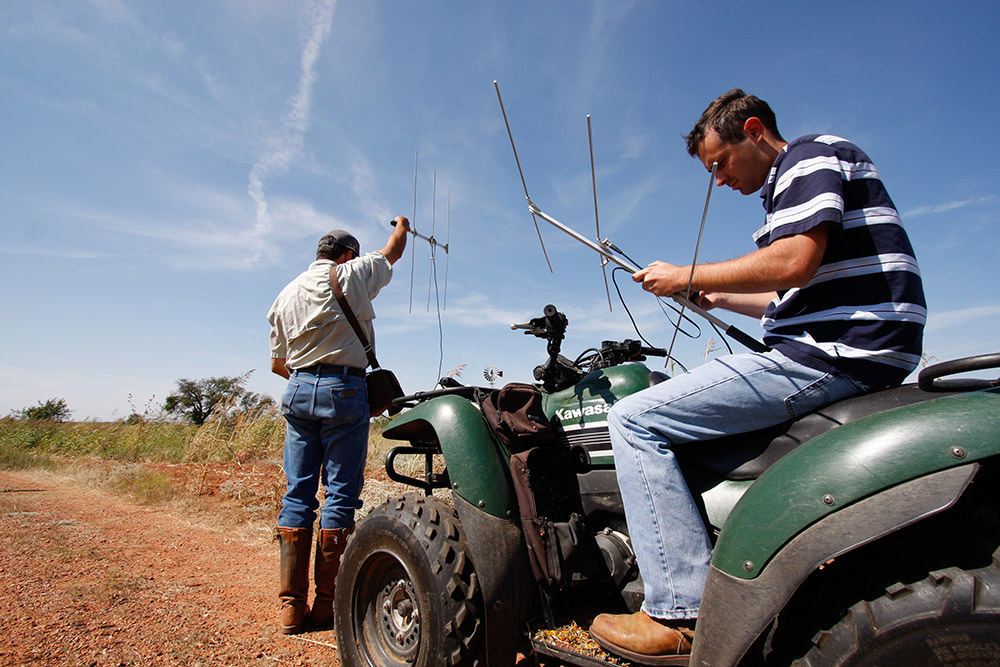
The answer, at least in many cases, appears to be: not very far. They’ve changed their schedule. This summer, GPS transmitters and activity sensors carried by quail on the Rolling Plains Quail Research Ranch are giving us an unusually good look at what happens when the afternoon heat becomes severe.
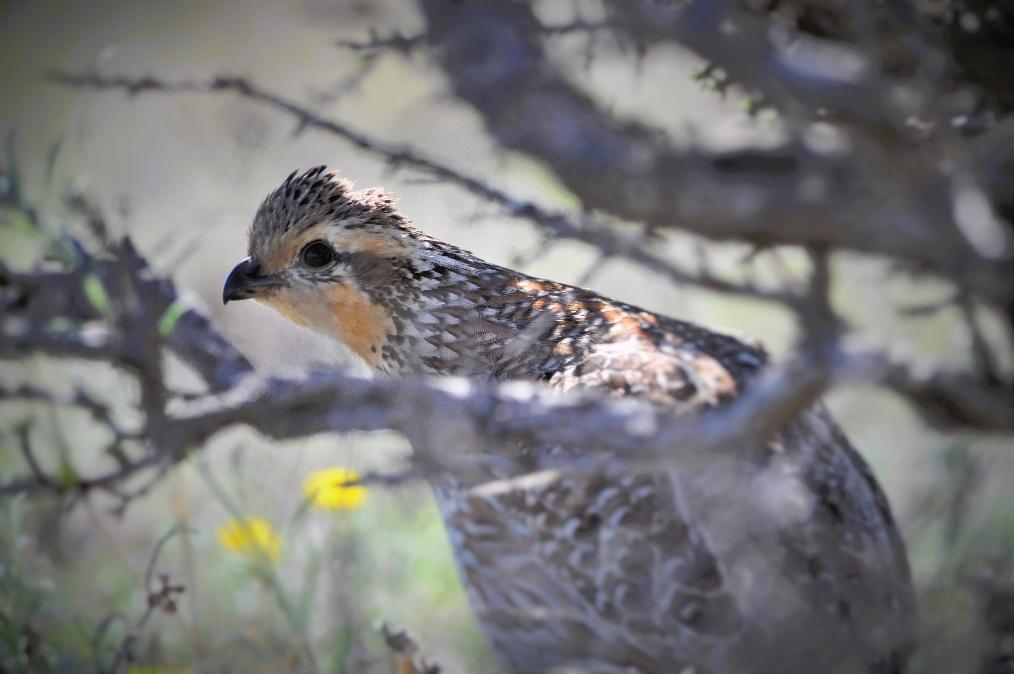
Life Six Inches Above the Ground
Humans experience a 105°F afternoon standing five or six feet above the ground—and hopefully not far from an air-conditioned pickup. A bobwhite experiences it about six inches above the soil. Direct solar radiation can make conditions near exposed ground considerably harsher than the temperature reported by a weather station.
Since July 1, we have collected GPS and activity data from 21 tagged quail on the Research Ranch, with 17 birds providing enough GPS locations for detailed habitat comparisons. Their transmitters contain accelerometers that measure physical activity using ODBA, or Overall Dynamic Body Acceleration. Simply put, higher ODBA means a bird is more active.
The pattern is striking. During 7–8 AM, median activity was approximately 2,500 ODBA units. By 2–4 PM it had fallen to about 520—a decline of nearly 80 percent. GPS data tell the same story. Median net displacement declined from about 62 feet/hr during 10 AM–2 PM to about 32 feet/hr during 2–6 PM, a reduction of roughly 50 percent.
During these brutally hot afternoons, the quail aren’t necessarily disappearing—they’re shutting down.

Where Are They Going?
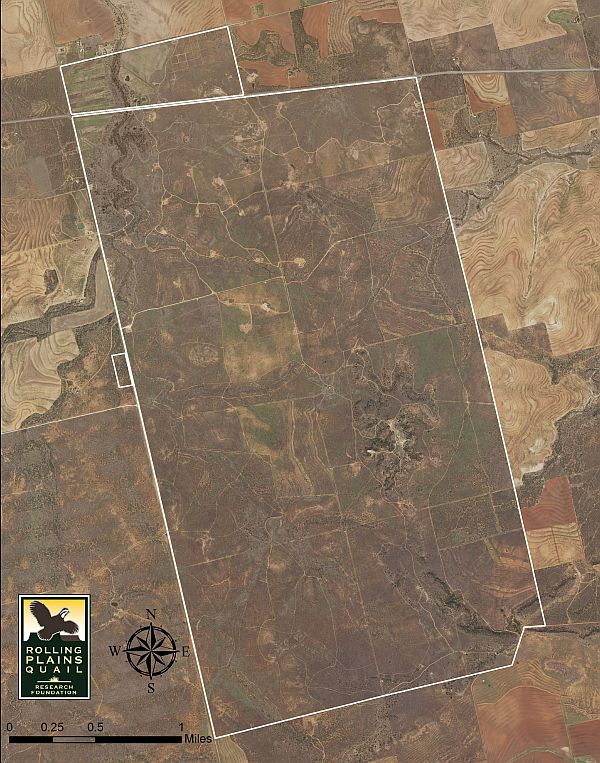
We can now begin answering that question as well. Using high-resolution aerial imagery, we classified woody canopy across the Research Ranch and compared the habitat used by our tagged birds with what was available within their summer ranges.
The preliminary result is compelling. Woody canopy represented a median of only about 7 percent of the habitat available to individual birds. Yet during the hot afternoon period from 2–6 PM, a median of about 26 percent of GPS locations occurred directly in woody canopy—roughly three times its availability. Fourteen of the 17 adequately sampled birds used woody canopy more than expected during those hours.
The same pattern appears when we look around each GPS location rather than just at the exact point. Median woody canopy within 15 feet of a bird increased from about 6 percent during 10 AM–2 PM to nearly 13 percent during 2–6 PM.
This makes biological sense. Acacia, lotebush, hackberry, plum, and other woody plants provide more than escape cover. Their canopies intercept solar radiation and create shaded microsites that can function as thermal refuges. During extreme heat, the arrangement of those refuges across the landscape becomes particularly important.
Missing Quail Aren’t Necessarily Fewer Quail
None of this means prolonged heat and drought are harmless. Habitat quality can deteriorate, insect availability may decline, late nesting attempts can fail, and chick survival can suffer. Eventually, fewer observations really can mean fewer birds.
But our GPS and accelerometer data demonstrate an important distinction: quail abundance and quail visibility are not the same thing. A bird sitting nearly motionless beneath an agarita bush for several hours hasn’t disappeared from the ranch. It has simply become much harder for us to see.
So, the next time you’re crossing your ranch at 3 PM, the thermometer reads 106°F, and you wonder where all the quail went, look at the landscape from six inches above the ground and ask: If I were a quail, where would I spend the next four hours?
Chances are, that’s where the quail are.