I would say for the most part, everyone is reporting above-average numbers for their respective areas, most say best since 2017 or similar to 2024.
These reports come from a variety of sources, including state agency biologists, Quail Forever biologists, landowners, QuailMaster students, and others with a passion for quail. Most don’t represent any kind of standard surveys or quail counts, just general observations. We asked them to rate their area, “1 being pitiful” to “10 being fantastic”.
We hope you will provide us with your observations as the season progresses. I have categorized reports into the following regions: Rolling Plains, High Plains, West Texas, Central Texas, South Texas, and Oklahoma.
Rolling Plains
 Dan Foley, RPQRF biologist reports for NW Runnels County “Good range conditions, best quail population I’ve seen in the past 5 years. I’ve counted 8 separate coveys, each with 12-15 birds, on my small 160-acre ranch. Great to train birddogs with. Score: 9.0” and for Central Kent County “Good carryover from last year, in combination with timely rainfall and moderate summer temperatures has generated good range conditions, resulting in a strong quail population. Numerous large coveys are readily observed while driving on ranch roads. Score: 8.5”
Larry Gabel from southern Borden County reports, “Exceptional winter and spring rains. Our average annual rainfall is 13,” last year we got 18″ and so far for this year, 13 inches of rain. Broomweed is thick and 3ft tall. Tanks are full, sunflowers are too tall to walk through, and quail coveys are 30+, both bobs and blues. Our participation in the Quail Guard study showed us we have an exceptionally low parasite infestation rate, so going into hunting season with strong numbers and great range conditions. Being conservative and calling this season 8.5++. God is good and I think he likes us.
Chip Ruthven, with Texas Parks & Wildlife Dept. says “I’d give the Matador WMA in Cottle County a ‘7’ or an ‘8’. Similar to last year. Still seeing some bumblebee-sized chicks, so broods are still hatching out. Great spring rains and decent early summer rains. However, we have been missing out on the recent rains and are starting to dry out. Only 0.6” in the last month or so. Good rains at our new Teacup Mountain WMA in Foard and Hardeman Counties pretty much all spring and summer long. Around 29” so far this year. I’d say a solid “7” there.
Hunter Hopkins at the Matador WMA says, “Right now, the data is on track with last year, which ended up ranking the fourth highest in harvest in twenty-five years. I would score the Matador WMA at a 7 out of 10.”
Colton Beam at the Lowrance Ranch in King/Knox Counties says, “I’ll start with the rating I feel is fit for what I’ve seen thus far in the season, and that’s a very solid 7. With a rainfall total of roughly 33″ and a mild summer, range conditions couldn’t be much better for us. High abundance of compensatory growth, seed-producing forbs , and insects are present throughout the property, promoting ideal conditions for the quail population to thrive. Areas that have undergone some form of land improvement host a higher abundance of large coveys vs. strictly Juniper/Mesquite thickets, where it’s generally fewer individuals per covey. I’ve also noticed that essentially every Whitetail Deer supplemental feeding station is home to at least one very large covey, one of which I observed over 30 individual bobwhites in visual sight. I do believe that we had a double hatch this year in portions of the ranch. Recently, I’ve been seeing multiple coveys that have little 3-4″ chicks running with them. Addedly, I did observe three separate coveys of Scaled Quail this spring/summer, which is exciting to me. I’ve only seen a covey of them once in my time on the property, so that’s always a treat. In conclusion, the state of our quail population is well above average, but there is still room to improve.”
Rick Snipes says, “Probably a “9.”. A pin if we consider 2015 an “11” should be a great year here in Stonewall County.”
Marisue Potts in Motley County reports, “We are seeing Bobs in groups of 20-24 with several different sizes. Such a delight. Yes, we are braking to let them cross the road, but half the time the covey will split and half go one way and half the other. From seeing just a few coveys and only hearing 3 cocks at stops last year, we hear 5 to 6 calling at stops this year. We are still facing recovery from desert termites in one big pasture where we would normally hear more calls. Rains have been scattered showers with some areas receiving very little. (Highway gage at Mott Creek Ranch gate 32.55” while at the camp 2.5 miles away, the total has been about half at 15”). Still, we are indeed giddy just to see these little guys on the good, though trashy, cover. More ragweed and broomweed than I’d like, but if that makes quail happy, I’ll stand down.”
Jordan Davis, a Quail Forever Biologist, reports “in Cottle, King, Motley, Dickens, and Foard counties, I would rate it an 8. Hall and Childress counties, I would have to rate it a 7, but that can easily be argued to be at an 8 as well. Both Hall and Childress counties are still appearing to be having an above-average quail crop this year; however, I am not seeing quite as many there as I am in the other counties I cover. Well-timed and abundant rainfall has helped drastically. There is also an abundance of invertebrates that have been active since early Spring to feed the chicks. According to landowner observations in Dickens County, it is also a good year for blues there.”
Brody Larkin, TPWD Biologist at the Gene Howe WMA reports, “First and foremost, the Gene Howe WMA has experienced an extraordinary recovery from the Smokehouse Creek Wildfire that came through in February 2024. Most people who visit the WMA can’t believe that the property burned at all. All flora and fauna are doing great this year. As of September 15, 2025, the GHWMA has received almost 19 inches of rainfall, which has us closing in on our yearly average. The numbers show a decent year for quail. We have observed 2 hatches of Bobwhites, but have not seen any small chicks recently. We are seeing multiple coveys with ½ to ¾ grown chicks nearly every single day in our day-to-day operations. I am optimistic that this year will be better than last year. I would rate this year a 6 out of 10.”
Taylor Daily, Wildlife Biologist, Quail Forever: reports “for Clay County, overall, I would give it an 8. I’m seeing bobwhites all over the place and on several properties routinely. The timely spring and summer rains have allowed the native rangelands to boom with both quality nesting habitat and seed-bearing vegetation! I bet the high-quality habitat conditions, driven by the timely rainfall, allowed many hens to re-nest if they had a failure early on.”
Justin Trail says, “I think western Shackelford County and Eastern Jones County is going to be a 5. It is at least twice as good as last year. We have raised birds all summer and are still seeing some 4-6 week-old birds.”
John Cox in Garza County says, “I rate it 8-9, cover is excellent, helped by spring rain and September rains. Quail are very abundant on the ranch. This afternoon, while driving a tractor ½ mile from a cultivated field to the house, I saw 7 coveys. One covey of blues had birds that were only ½ grown, indicating a late hatch. The birds that I saw today were pretty evenly divided between blues and bobs; however, overall, bobs outnumber blues about 70/30. Deer are doing well, and antler development is good. The turkey population, like quail, is very good. Non-game birds in many species are plentiful. Roadrunners are everywhere. Lots of horned toads and snakes are also abundant and are moving now. So far, 2025 has been a great year for wildlife and has the makings of an excellent quail season!”
Jerry Bob Daniels: This is my report for Knox County on Circle Bar Ranch regarding estimates on our quail population. I feel confident with a 9. This is the best I’ve seen it since 2018. We have had two years of very wet weather. We have currently been recording 31 inches of rain since January of this year. I tested last year’s population and hunted only two days this past January with my guide only. We began each day around 930 a.m., which as you know, is a late start. We drove 13 coveys and 18 coveys, respectively. I held off hunting until this year. In July, I traveled down the road south of my house for a mile and a half and counted 25 pairs without feeding the roads. The next day, I traveled north for one mile and counted 30 pairs. This is not counting the birds I could hear away from the roads. We have since been viewing coveys ranging from 12 to 15 birds per covey. I even spotted coveys that blended together with different-aged younger birds. I fully expect to raise 20 to 30 coveys per day on our hunts. Also, our water and cover are incredible.
High Plains
 Aaron Hunt, TPWD Biologist at Yoakum Dunes WMA says, “Yoakum Dunes WMA is sitting pretty well this year. Our current rainfall total is at around 11 inches for the year (surrounding areas I suspect, have received more) but the rains have been timely throughout the summer. I am seeing plenty of coveys of both bobs and blues, mostly ¾ grown and up, but have seen a few late chicks recently in the surrounding area. All in all, I think I would rate this year a 6-7, not quite as good as last year but still good.”
Chadd Malone, TPWD Biologist at Pampa, TX, reports “Quail (bobs) have had a good year up here this year. My surveys won’t show that, but they are out there. I hear and see them every time I go out, and get good reports from every landowner I talk to on the phone. I would say this is an 8 out of 10 year, but am excited/anxious to see what the hunting season shows. Lots of good rainfall, very green up here, and we had a lot of growth.”
Retired TPWD Biologist and now wildlife consultant Jeff Bonner says, “I’m going to say 8.0. Good growing season of ’24 with good residual cover. Rainfall between Sep. 1, 2024 – Aug. 2025 as follows: Fall ’24 – 10 inches, Winter 24-25 – 1 inch, Spring ’25 – 11 inches, and Summer ’25 – 5” (Total = 26”) and relatively cool temps. That’s the formula for an 8.0, and what I’ve been seeing on the ground concurs. Even locations with marginal to poor habitat should have some quail this year. Also, if the newsletter goes out beyond Texas, central to southern Kansas should expect a 9.9 this year.”
West Texas
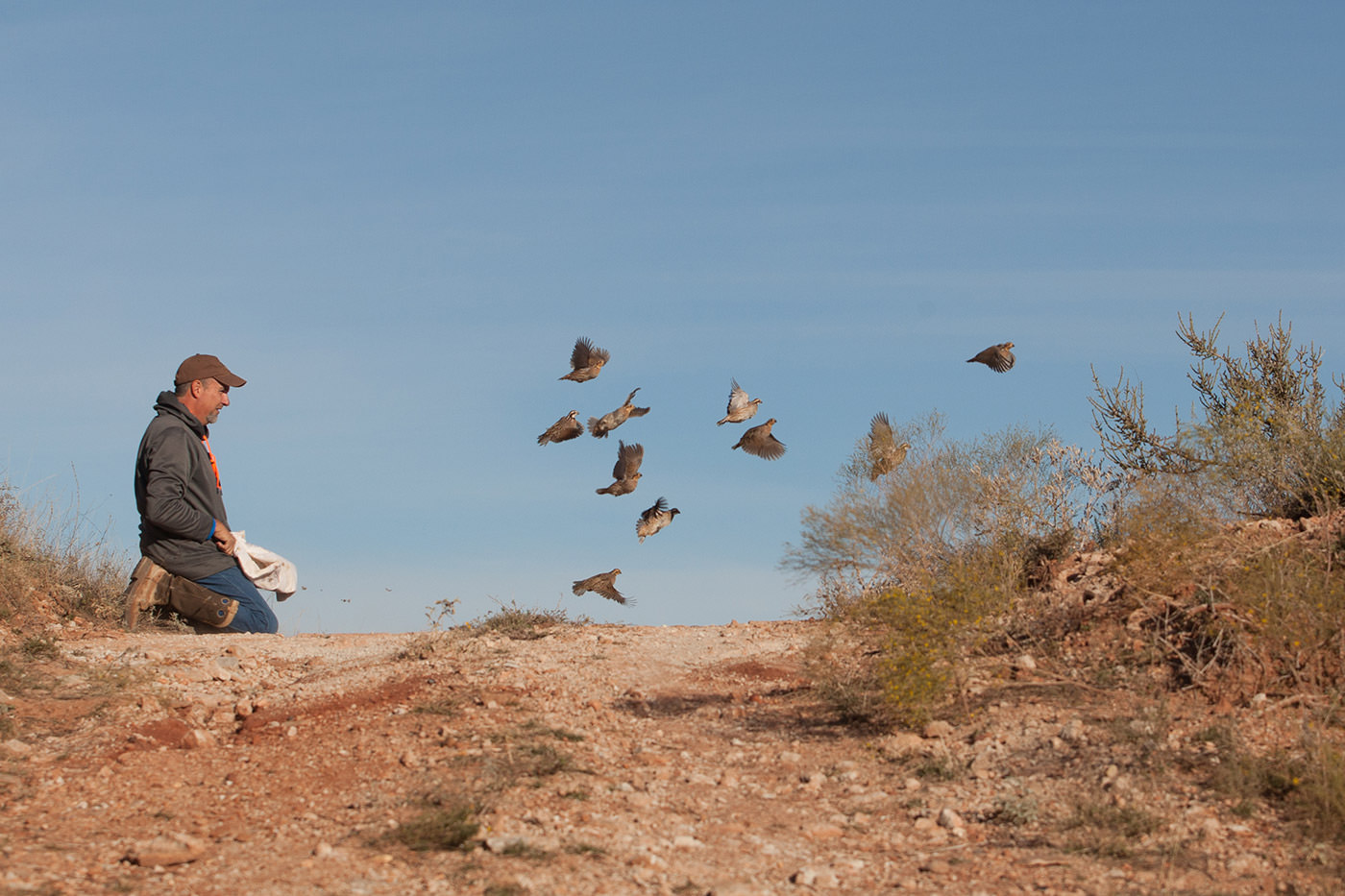 Jose L. Etchart, Jr. Texas Parks & Wildlife Department Wildlife Biologist, has the following report:
The Trans-Pecos region appears positioned for a recovery season, with improved rainfall, reduced drought stress, and better habitat conditions setting the stage for increased quail populations. Hunters planning for the 2025-2026 season should prepare for potentially the best hunting conditions in several years; however, continued conservation-minded practices remain crucial for long-term population sustainability.
Hunting Season Projections for 2025-2026:
• Population Forecast: Average to slightly above-average, representing a significant turnaround. Some biologists reported an early summer hatching and a late summer hatching. First hatch nesting success could have been affected negatively due to monsoon flood events, but within the week, bumblebee-sized chicks have been observed with pairs (groups of 10-12), reflecting a more successful 2nd hatching.
• Success Rates: Hunters should expect more productive outings with higher encounter rates (canopy cover dependent)
• Habitat Conditions: Much improved cover and food availability make them harder to find due to the increase of canopy cover
• Water Dependency: Less critical than during drought conditions, expanding huntable habitat.
Cody McEntire at Elephant Mountain WMA says, “They have been fortunate in receiving close to 10 inches of rain this year. We have also observed 2 distinct hatches with clutch sizes ranging from 8-15. I expect a better year than last year, but we still do not have the blue populations that Black Gap WMA supports. Overall, I would rate the quail year a 5-6.”
Travis Smith, Wildlife Biologist at Black Gap WMA gave the area 7-8 rating for this year for blue quail. He says, “Summer rains started in July and have continued to date. We continue to see birds of all sizes and many coveys to date. Should be an above-average year for quail harvest at Black Gap.”
Central Texas
Deanna Pfeffer at the Kerr WMA says, “We are seeing more than normal and have seen evidence of a good hatch, but still not a large or huntable population. We have had 39” of rainfall, well over our average for the year already.”
Mark Mitchell at Mason Mt WMA says, “We appear to have had a good hatch. We are at least seeing more coveys than usual. This doesn’t mean we have a lot of quail, just more than average. We still don’t (and never will) have a quail population strong enough to offer public hunting opportunities.”
Dana Wright reports from her family ranch in Llano County, “that while we still don’t have huntable numbers of quail in Llano County, we have seen noticeably more quail this year than in previous years. We have seen numerous broods and hear quail calling on a regular basis, music to our ears. We had a great year for rain, receiving 31” and have phenomenal grass and weed cover”.
South Texas
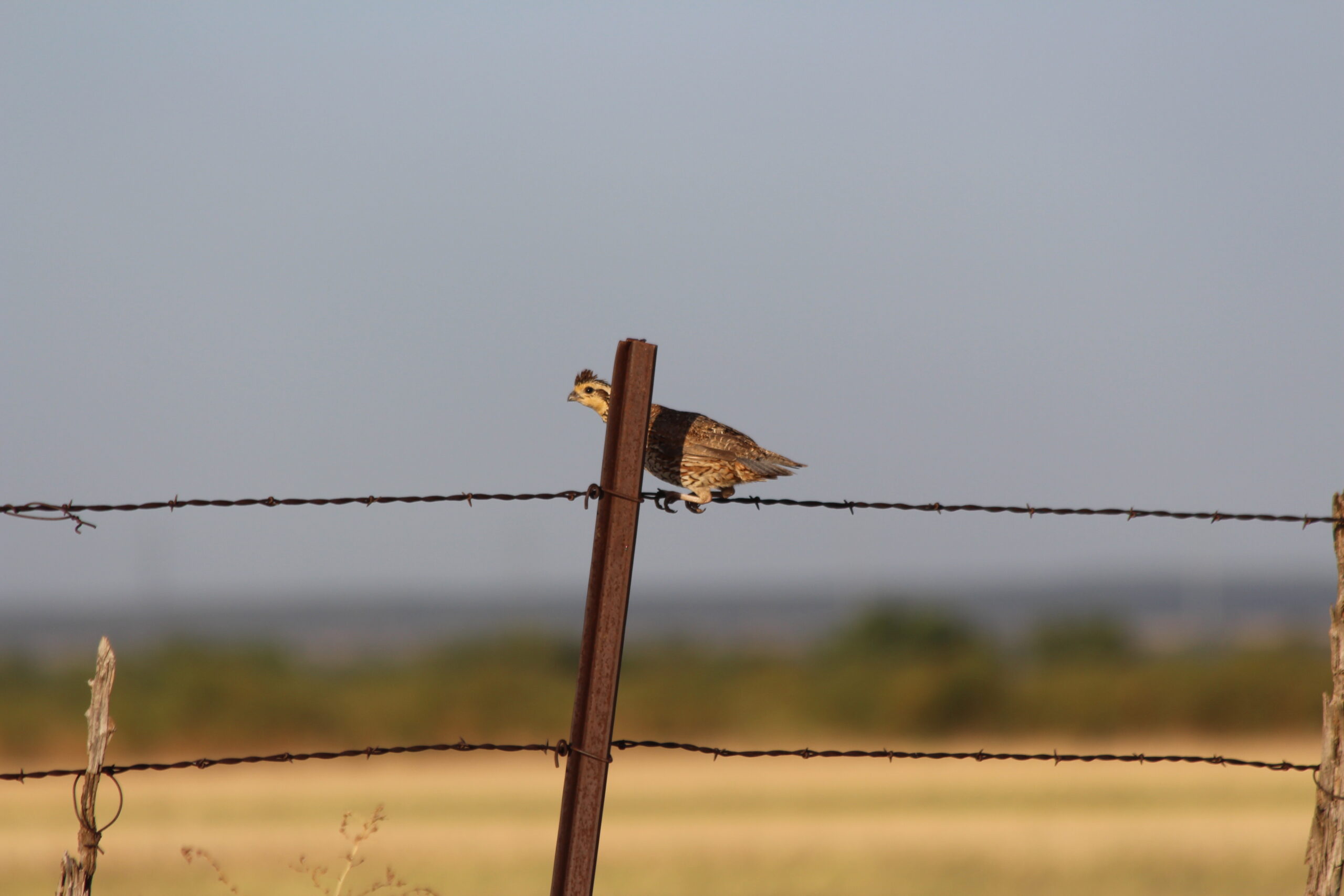
Tom Pattillo in Webb and Jim Hogg County says, “We didn’t get timely nesting rains and no bug production as a result. I’d rate it a 5. We had great carryover, spring call counts, and nesting habitat. Unfortunately, rains were all around but we were left out. 5” below normal.
Rob Porter from Hebbronville in Jim Hogg County says, “I’m predicting a ‘6’ based upon the following observations. Mediocre rain totals so far this year (15 inches compared to 24 inches last year) and a lack of rain frequency this past spring and so far this summer. I believe we lost about half of our first hatch because of a lack of bugs. Second and third hatches look good, but smaller clutches, hence smaller coveys. Observations of numerous yet smaller coveys of birds when cruising each evening. My 2024-2025 prediction was a 9 and it came true. If 2025-2026 is 2/3 as good as last year, my prediction of a 6 will be correct and still a good season.”
Lori Wright, TPWD Biologist at the Chaparral WMA says, “It is probably looking like a 5 on the quail forecast. We had some late spring rains this year that kicked nesting season off later than normal. There was sign of at least two hatches this year with bumblebee-sized chicks and medium-sized chicks present during surveys. Likely will be some young birds on the ground during hunts this year. We are seeing majority Bobwhites, but we have been seeing some Blues as well. However, currently the Chap is desperately needing some good rains, as we have been dry for the majority of the summer months.”
Austin Killam, TPWD Biologist at the James E. Daughtrey WMA says, “We have been experiencing severe drought conditions for most of the spring and summer, with ~12.5″ for the year. We had some decent rains in May and June with a brief green-up, but we continue to dry. We were seeing quail paired through August and calling through July, with few coveys seen. There are some young birds on the landscape, but not as many as we saw last year. We are in need of some rain in South Texas to end the drought conditions we are experiencing. Overall, I would say we are expecting a slightly below average year of 4-4.5 out of 10.”
Dr. Abe Woodard with the East Foundation reports for several properties. “It looks to be an exciting year down south. We entered the breeding season with good numbers and have had excellent conditions in the spring and early summer. I would give our Jim Hogg County properties a ‘9,’ ranging from ‘8 to 10’ based on the site. Our Kenedy County property has continued recovering from the poor year two years ago. From general observations, I would put it at an ‘8,’ but that may be an underestimate.”
Oklahoma
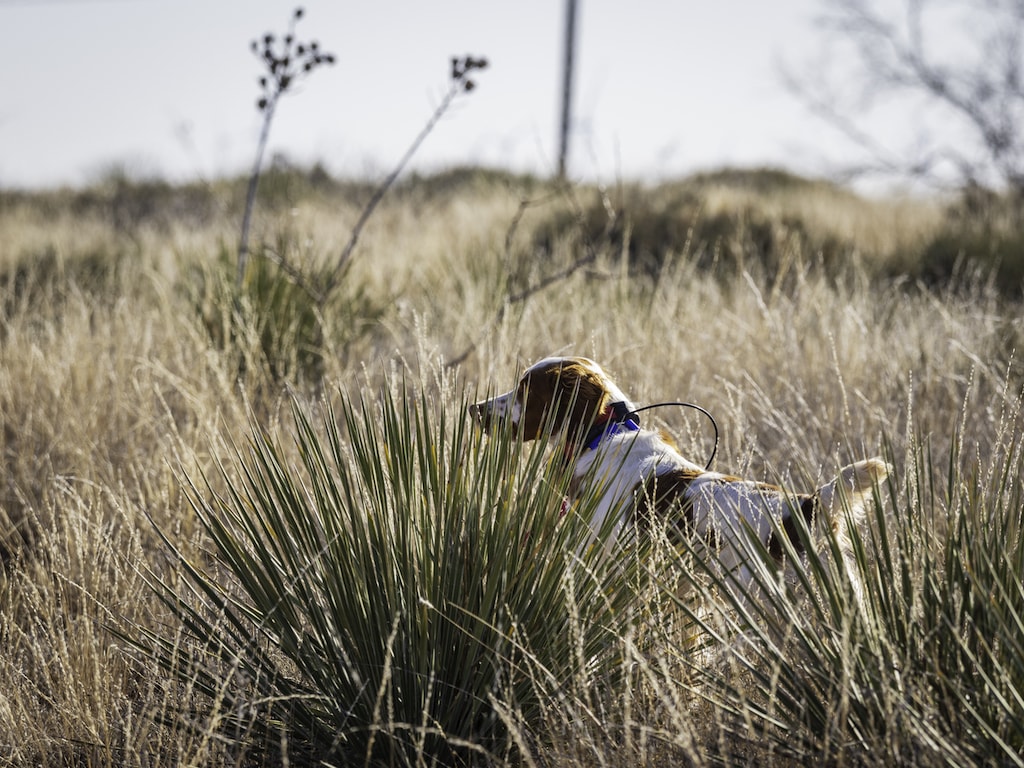 Marcus Thibodeau reports for Packsaddle, Black Kettle, Ellis County Wildlife Management Areas,
Marcus says “I’d give it a 7.5-8 using our historic boom years as a 10 and comparing to the last several years, we have seen some great production throughout this mild and wet summer after a decent quail season last winter but will have a better grasp for what has “stuck” when we do our county road surveys and Wildlife Management Area covey call surveys in October. Oklahoma has changed its regulations and license requirements for non-resident hunters since last season. I would encourage people to take a look at our October survey results when they are published, as it will paint a better picture for the upcoming season. The public lands I manage only offer opportunities for Bobwhite Quail.”
You can find the entire quail forecast for Oklahoma at the following link: