

By: Kyndal Underwood
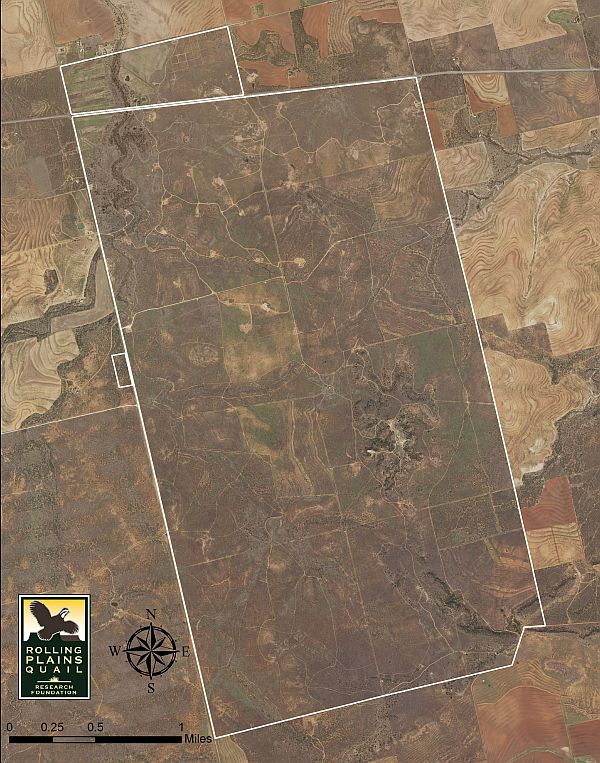
This spring, three pastures on the Rolling Plains Quail Research Ranch are undergoing a targeted restoration effort through the Natural Resources Conservation Service Environmental Quality Incentives Program (EQIP). The objective is to establish diverse native plant communities that support wildlife, particularly quail—while improving overall rangeland function, productivity, and resilience.
The process began in October with a broadcast herbicide application using a UTV-mounted boom sprayer. Although removing existing vegetation may appear counterproductive, this step is foundational to successful rangeland restoration. Many degraded systems are dominated by non-native or low-value grasses and weeds that suppress native species through competition for water, nutrients, and light. By reducing this competition, we create a clean, receptive seedbed that significantly increases the likelihood of successful establishment of native grasses and forbs.
Following initial vegetation control, a temporary wheat cover crop was established to stabilize and condition the soil during the transition period. Cover crops serve several important functions in restoration systems: they reduce erosion by protecting the soil surface, improve soil structure, and contribute organic matter that enhances water infiltration and nutrient cycling. In the Rolling Plains, where wind and rainfall can quickly degrade exposed soils, maintaining ground cover is critical. Additionally, the wheat helps suppress undesirable annual weeds, further preparing the site for native reseeding.
In March, the pastures were treated again—this time using drone-based herbicide application—to terminate the wheat. Timely termination ensures that soil moisture and other limited resources are available during the critical germination and establishment window for the native seed mix, which is especially important given the typically dry spring conditions of this region.
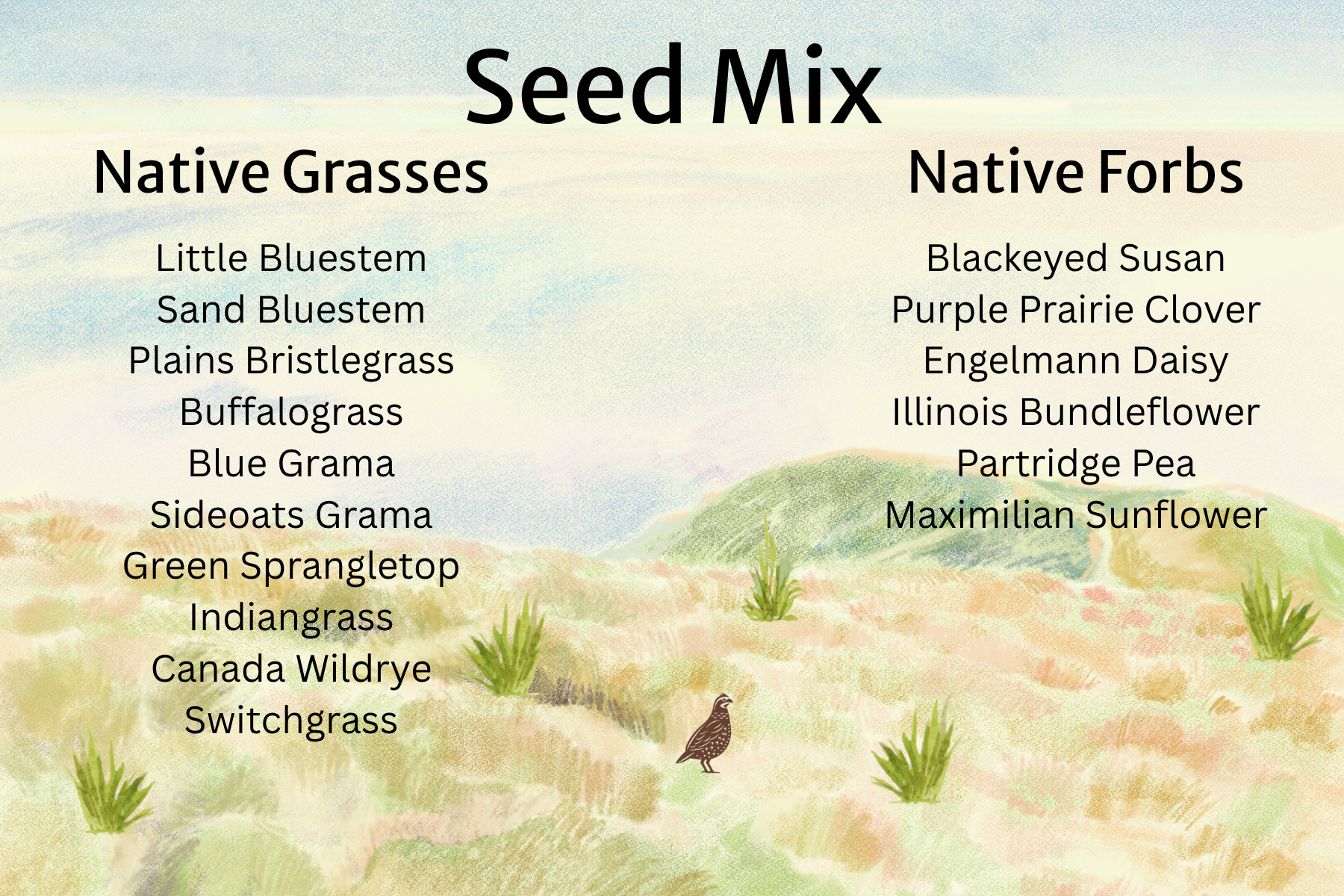
The final phase occurred in April, when a diverse mix of native grasses and forbs were seeded across the treated pastures. This seed mix is designed to restore the structural and functional diversity necessary for high-quality wildlife habitat. Native bunchgrasses provide essential nesting cover, while a diverse forb component supports robust insect communities—an indispensable food source for quail chicks during early development.
Through this deliberate, multi-phase approach—combining strategic vegetation control, soil-building cover crops, and well-timed reseeding, the ranch is working to restore ecologically functional rangeland systems. Although these efforts require time and careful management, the long-term outcomes include enhanced wildlife habitat, increased plant diversity, and improved resilience to drought and other environmental stressors.
*Always consult with someone to make sure you are choosing native seeds based on your ecological region and soil type, the seed mix we used, may not work for your area.